
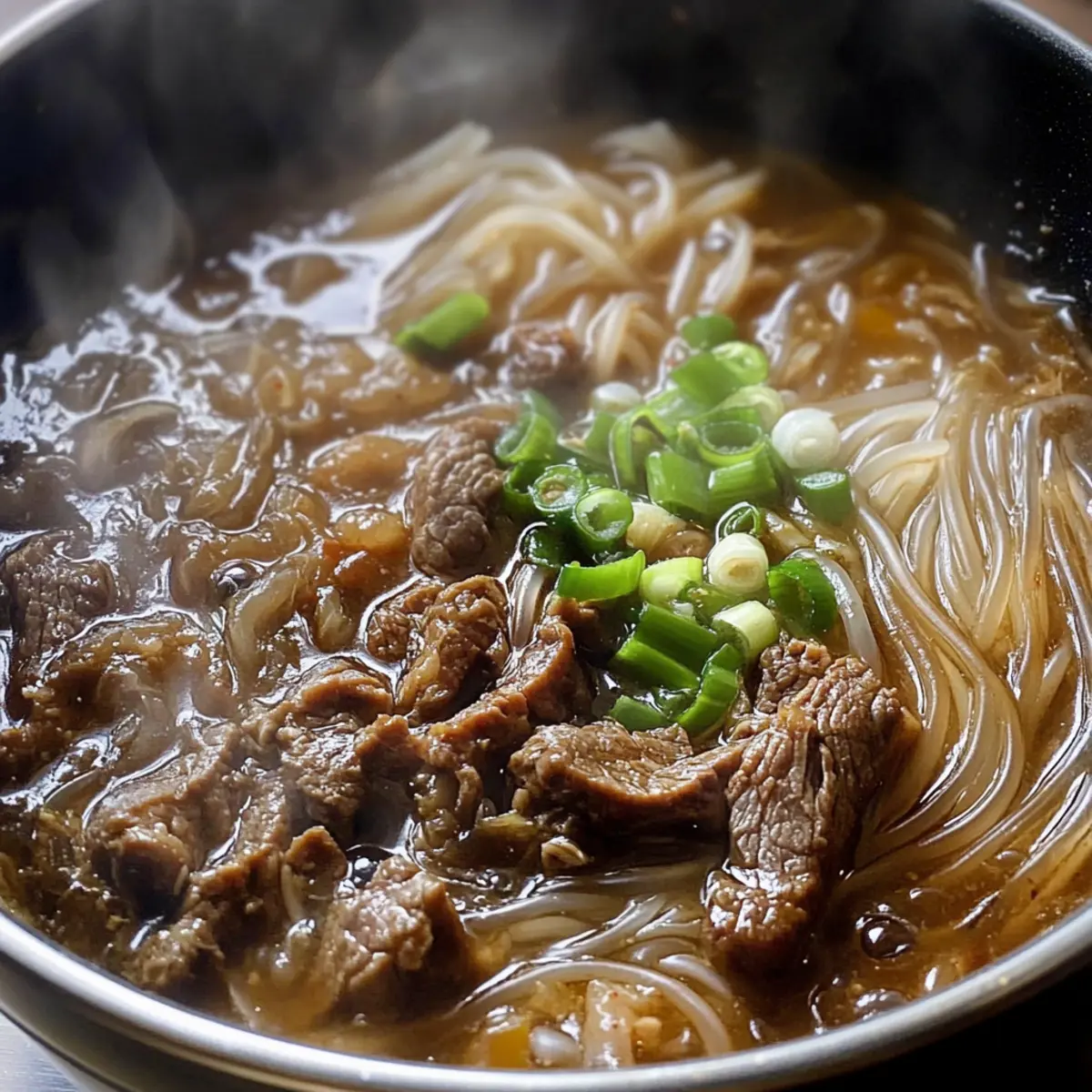
As I settled into my cozy kitchen one chilly evening, a delightful aroma wafted through the air, reminding me of warm family meals from days gone by. Today, I’m excited to share my Quick Korean Beef Bulgogi Stew with Glass Noodles, a dish that marries tender, marinated beef with chewy glass noodles and a savory broth. In just 15 minutes, you can whip up this comforting meal that not only saves time but also embraces the culinary art of repurposing leftover bulgogi. Forget takeout; this recipe is your ticket to bold Korean flavors right at home, perfect for those busy weeknights or whenever you crave something special without the hassle. So, ready to elevate your dinner game and indulge in something truly delicious? Let’s dive into this flavorful adventure together!
Why You’ll Love This Recipe
Quick and Easy: In just 15 minutes, you can have a fragrant, hearty meal on your table that’s a far cry from fast food.
Flavorful Comfort: The savory broth infused with tender, marinated beef and glass noodles will warm your soul, reminiscent of cherished family dinners.
Versatile Leftover Use: Turn night’s leftovers into today’s delight! Using leftover bulgogi not only saves time but elevates the dish’s flavor. Looking for more ideas on leftovers? Check out my Mini Beef Wellington for another creative twist!
Nourishing Ingredients: Each bowl is a balance of texture and taste, with chewy noodles and earthy mushrooms making every spoonful satisfying.
Crowd-Pleasing Dish: Be prepared for compliments! Serve this alongside steamed rice and kimchi for a complete Korean experience that friends and family will love.
Korean Beef Bulgogi Stew Ingredients
For the Stew
• Korean Beef Bulgogi – Adds savory sweetness to the stew. Using leftover bulgogi enriches the flavor.
• Sweet Potato Glass Noodles (Dangmyeon) – Provides a satisfying chewy texture, soaking up the broth perfectly. Rice noodles or udon can be used as a substitute.
• Enoki Mushrooms – Contributes a tender-crisp texture and earthy taste. Feel free to swap for shiitake or button mushrooms if you prefer.
• Green Onions – Offers a fresh, mildly pungent flavor that brightens the dish. Chives work well as an alternative.
• Water/Broth – Serves as the base of the stew, blending the flavors together. Using beef broth will deepen the richness of the stew.
• Sesame Oil – Enhances the nutty richness of the broth. Neutral oils can substitute, though they might not provide the same flavor.
• Soy Sauce – Provides a necessary umami depth and balance. Opt for low-sodium soy sauce for a lighter option.
Garnish
• Chopped Green Onions – Adds fresh notes on top of the stew. You can also sprinkle some sesame seeds for extra crunch and flavor.
Step‑by‑Step Instructions for Korean Beef Bulgogi Stew
Step 1: Soak the Noodles
Begin by soaking the sweet potato glass noodles in warm water for about 10 minutes, ensuring they soften while you prepare the other ingredients. This will make them tender and ready to absorb the flavors of the Korean Beef Bulgogi Stew later. Drain them well and set aside before moving to the next step.
Step 2: Heat the Beef
In a medium pot, set over medium heat, warm your leftover Korean beef bulgogi for about 3-4 minutes, stirring occasionally until the edges start to get slightly crispy. The goal is to revive the savory sweetness of the bulgogi while infusing it with the warmth of the pot, making it the star of your flavorful stew.
Step 3: Add Flavors
Once the beef is heated through, drizzle in the dark soy sauce and sesame oil, stirring to ensure the meat is evenly coated. Cook for an additional 1-2 minutes; this step brings out a rich umami depth that enhances your Korean Beef Bulgogi Stew, creating a luscious base for the broth.
Step 4: Pour the Broth
Carefully pour in approximately 4 cups of water or beef broth into the pot, stirring gently to combine all ingredients. Increase the heat to high and bring the mixture to a rolling boil, which should take around 3-5 minutes. The bubbling broth will meld the savory notes of the beef with the heartwarming taste of your stew.
Step 5: Add Noodles and Mushrooms
Once boiling, add the soaked glass noodles and enoki mushrooms to the pot. Stir everything together, then reduce the heat to medium and cook for about 3-4 minutes. This will allow the noodles to become tender, while the mushrooms soften and infuse their earthy flavor into the Korean Beef Bulgogi Stew.
Step 6: Final Touches
When the noodles are tender and the stew is heated through, turn off the heat. Sprinkle the chopped green onions generously on top for freshness. They’ll add a delightful crunch that balances the rich flavors, making your Korean Beef Bulgogi Stew ready to serve in all its inviting glory.
Make Ahead Options
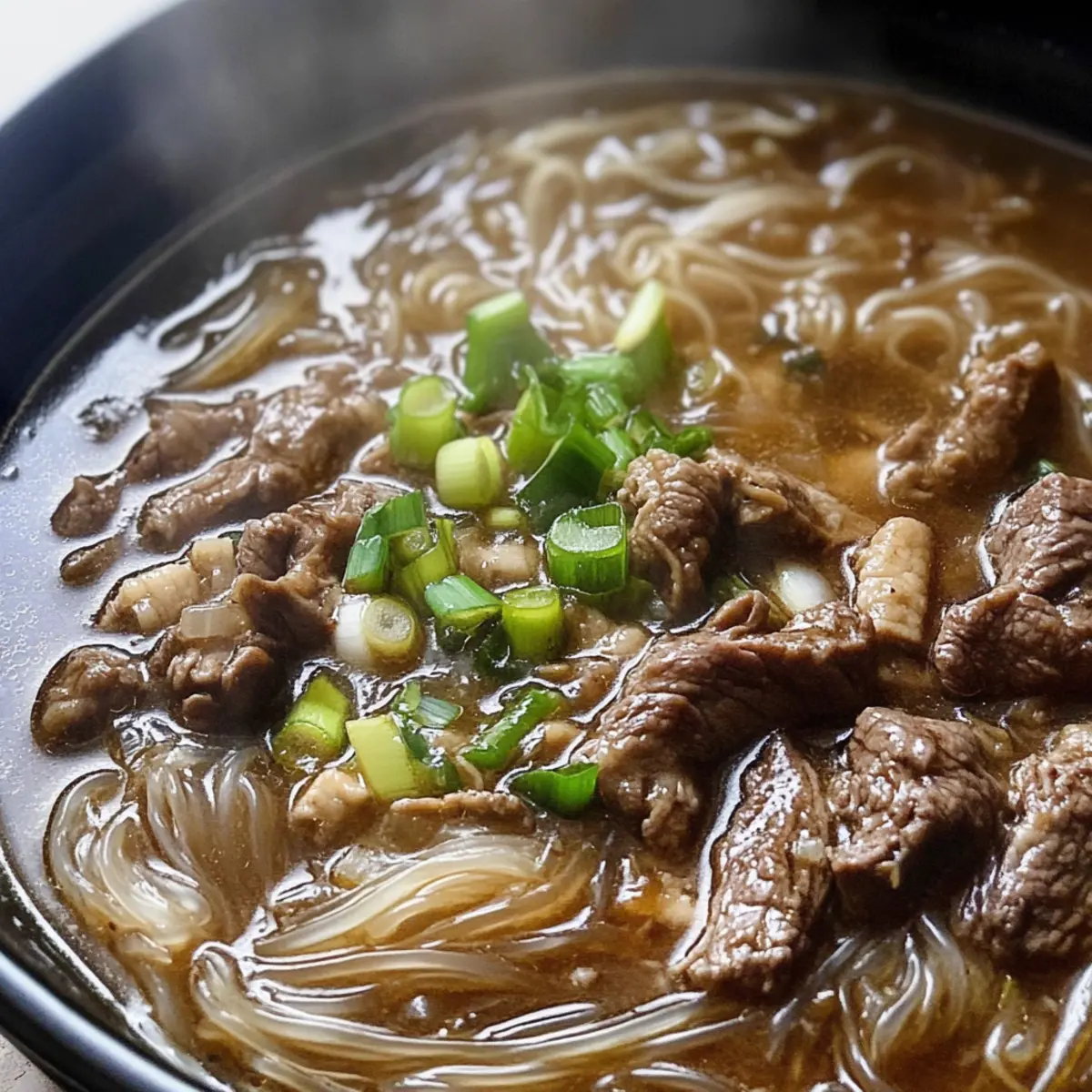
These delicious Korean Beef Bulgogi Stew components are perfect for meal prep, saving you precious time on busy weeknights! You can marinate and prepare the bulgogi up to 24 hours in advance, allowing the flavors to deepen. Additionally, soak the sweet potato glass noodles ahead of time; simply refrigerate them in their soaking water to maintain texture. When ready to serve, warm the bulgogi in a pot, add the broth (which can also be prepped up to 3 days ahead), and incorporate the noodles and mushrooms. This ensures every bowl of your Korean Beef Bulgogi Stew is just as delightful and satisfying as if made fresh!
What to Serve with Quick Korean Beef Bulgogi Stew
Indulging in a cozy bowl of savory stew invites you to elevate your meal with delightful pairings that resonate with bold Korean flavors.
-
Steamed Rice: A classic accompaniment that soaks up the rich broth, complementing every savory bite of the bulgogi stew.
-
Kimchi: This traditional fermented side dish adds a zesty kick, enhancing the stew’s depth while providing a probiotic boost for your gut health.
-
Asian Greens Salad: Light and refreshing, a salad with crisp greens and sesame dressing balances the warm stew, adding a layer of crunch in every mouthful.
-
Pickled Vegetables: These tangy bites contrast beautifully with the stew’s rich flavors, introducing a delightful pop of brightness that tantalizes the taste buds.
-
Sesame Spinach: A simple dish of sautéed spinach in sesame oil adds an earthy note that complements the beef while keeping your meal nutritious.
-
Ginger Tea: Sip some warm ginger tea alongside the meal for a soothing finish, echoing the warm spices in your stew while aiding digestion.
Transform your dinner into a full experience by layering flavors and textures around the comforting embrace of your Korean Beef Bulgogi Stew.
Storage Tips for Korean Beef Bulgogi Stew
Fridge: Store leftovers in an airtight container for up to 3 days to maintain freshness. Make sure to let the stew cool to room temperature before sealing it to avoid condensation.
Freezer: If you want to keep it longer, freeze portions in freezer-safe containers for up to 2 months. Thaw in the fridge overnight before reheating for the best texture and flavor.
Reheating: Reheat gently on the stovetop over low heat, stirring occasionally. You can add a splash of broth or water if it has thickened too much during storage, ensuring the Korean Beef Bulgogi Stew remains deliciously comforting.
Separation: If possible, store glass noodles separately to prevent them from becoming too soft when stored; add them just before reheating for optimal texture.
Korean Beef Bulgogi Stew Variations
Feel free to get creative and customize this flavorful stew to suit your taste!
- Rice Noodles: Substitute sweet potato glass noodles with rice noodles for a lighter texture and flavor that’s just as delicious.
- Udon Noodles: Switch to udon noodles for a hearty twist; their thickness adds a satisfying bite to your stew.
- Extra Veggies: Enhance your stew with seasonal vegetables like bok choy, napa cabbage, or carrots for added nutrition and color.
- Spicy Kick: For heat lovers, add a teaspoon of gochujang or red pepper flakes to introduce a delightful spice to your Korean Beef Bulgogi Stew.
- Mushroom Medley: Swap out enoki mushrooms for a mix of shiitake, oyster, or button mushrooms, each bringing unique textures and flavors.
- Low-Sodium Soy Sauce: Opt for low-sodium soy sauce to control your salt intake while still achieving that essential umami depth.
- Homemade Broth: For a richer taste, make your broth from scratch using beef bones and aromatic vegetables, capturing authentic Korean flavors.
- Fusion Style: Try adding a touch of Italian by incorporating fresh basil or even a sprinkle of parmesan; this unexpected twist will surprise your guests!
Explore these variations to personalize your meal and keep things exciting in the kitchen! If you’re eager for more creative leftovers ideas, my Southern Glazed Beef can inspire new culinary adventures. And for a sweet finish after this savory dish, don’t miss out on my delightful Apple Crisp Korean dessert recipe!
Expert Tips for Korean Beef Bulgogi Stew
• Noodle Soaking: Ensure the noodles are fully soaked before adding them to avoid clumping or uneven texture in your Korean Beef Bulgogi Stew.
• Watch the Cook Time: Keep an eye on the cooking time; overcooking the noodles can lead to a mushy texture, ruining the dish.
• Taste as You Go: Always taste the broth before serving; you can adjust the seasoning with additional soy sauce or sesame oil to suit your palate.
• Use Quality Beef: Opt for high-quality or well-marinated beef bulgogi to enhance the stew’s overall flavor profile and tenderness.
• Fresh Garnishes: Adding fresh green onions right before serving brings a crunch and bright flavor, making your stew visually appealing and delicious.
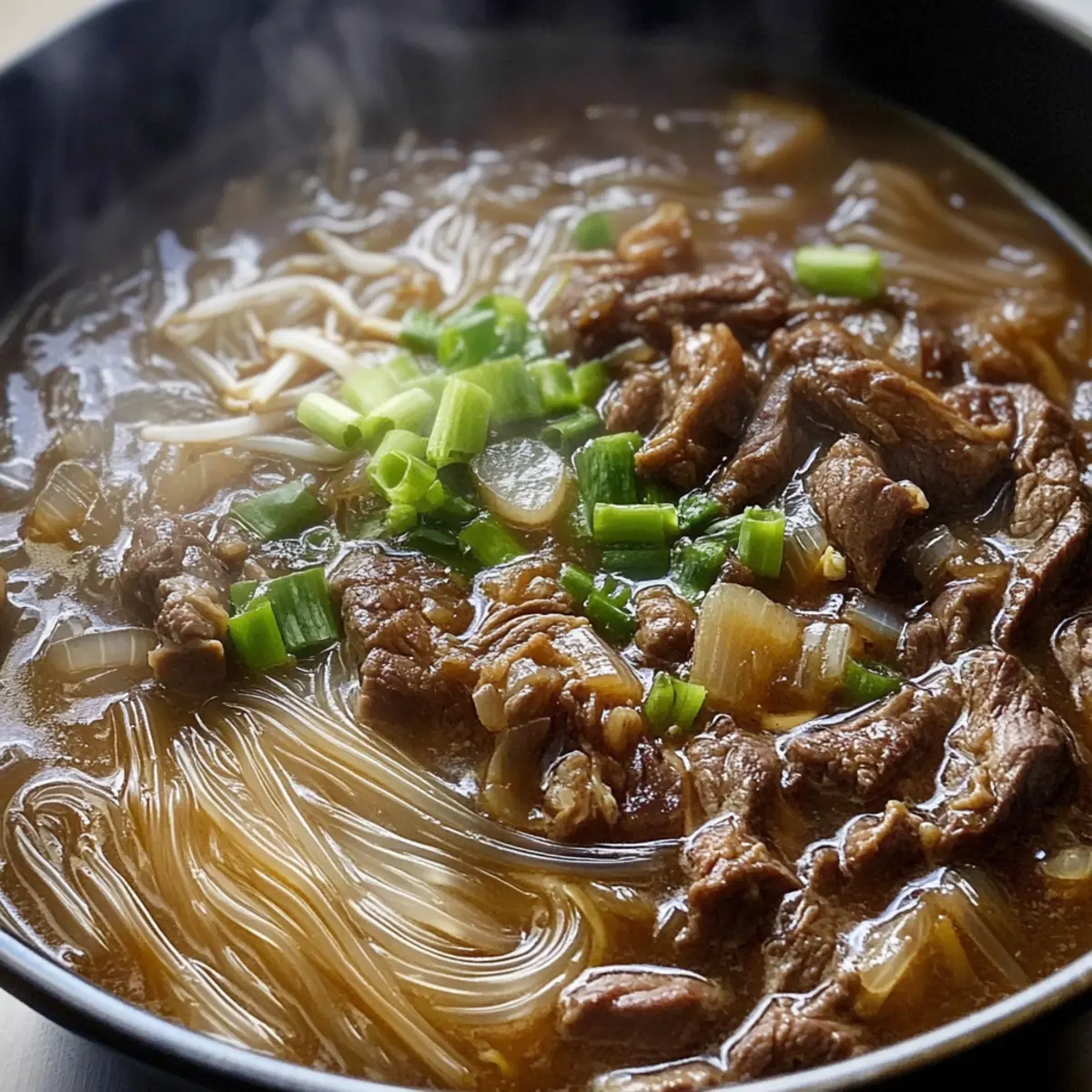
Korean Beef Bulgogi Stew Recipe FAQs
How can I select the best Korean Beef Bulgogi for my stew?
Absolutely! When choosing beef for your bulgogi, look for cuts like flank steak or sirloin that are well-marbled for tenderness. These cuts absorb the marinade beautifully, ensuring a rich flavor. Ensure the beef is bright red without any dark spots, indicating freshness.
What should I do with leftovers from the stew?
Leftovers are a treasure! You can store the Korean Beef Bulgogi Stew in an airtight container in the refrigerator for up to 3 days. Make sure to cool the stew to room temperature before sealing it to avoid condensation, which could lead to spoilage.
Can I freeze Korean Beef Bulgogi Stew?
Definitely! To freeze, allow the stew to cool completely. Then, transfer it into freezer-safe containers, ensuring there’s some space at the top for expansion. It can be kept frozen for up to 2 months. When you’re ready to enjoy it again, thaw overnight in the fridge and reheat gently on the stovetop.
What if the glass noodles turn mushy in my stew?
Great question! To avoid mushy noodles, soak them just before adding them to the stew instead of allowing them to soak for too long. Add soaked noodles between steps 4 and 5 of the cooking process. If you still find them soft, you can also limit the cooking time by adding them last and cooking briefly (about 2-3 minutes).
Are there any dietary considerations for making this stew?
Yes! If you have dietary restrictions, opt for low-sodium soy sauce to reduce salt intake. Additionally, if serving for people with gluten allergies, you can look for gluten-free soy sauce and make sure your glass noodles are also gluten-free. This way, you still get to enjoy the wonderful flavors of Korean cuisine without compromising dietary needs.
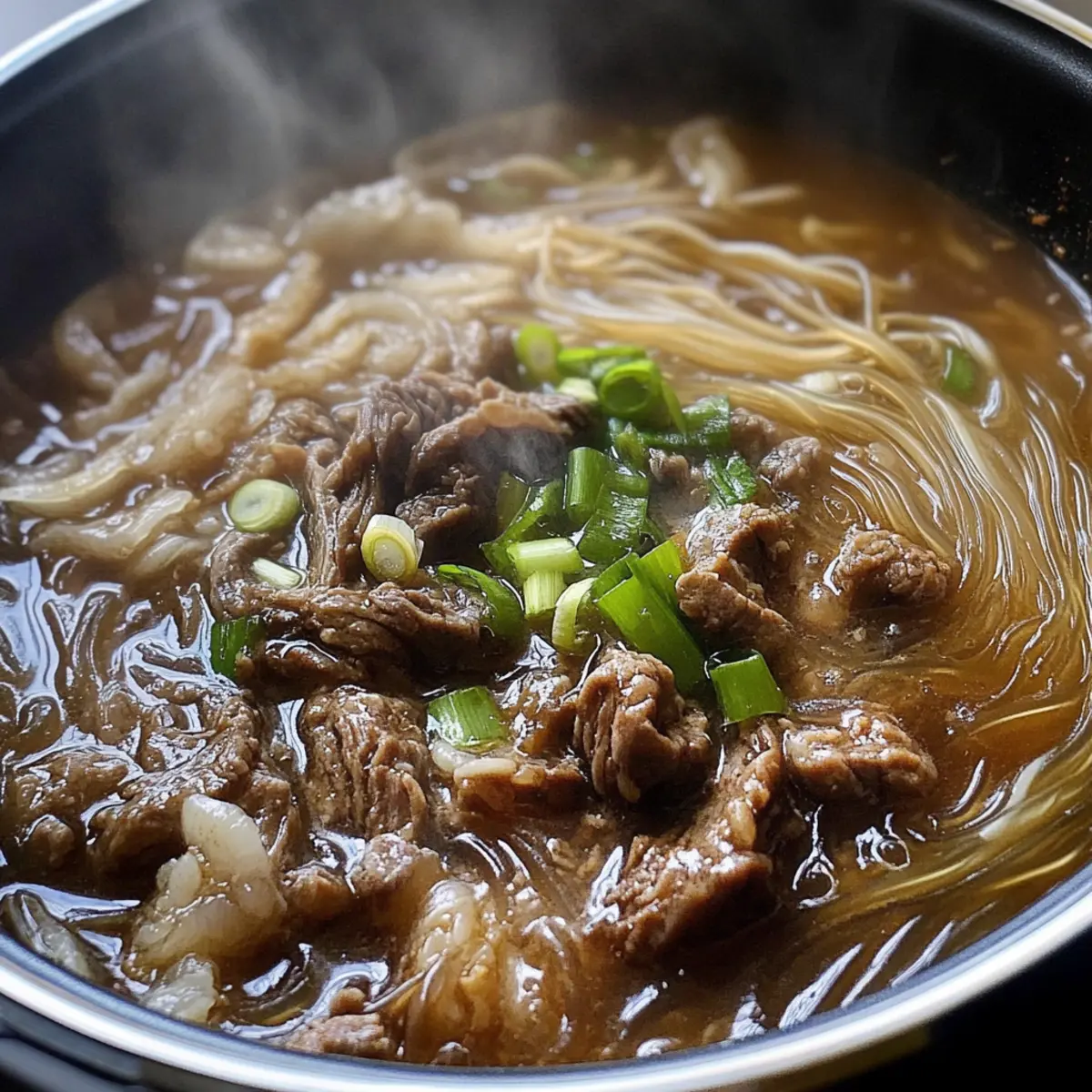
Delicious Korean Beef Bulgogi Stew in Just 15 Minutes
Ingredients
Equipment
Method
- Begin by soaking the sweet potato glass noodles in warm water for about 10 minutes, ensuring they soften while you prepare the other ingredients.
- In a medium pot, set over medium heat, warm your leftover Korean beef bulgogi for about 3-4 minutes, stirring occasionally until the edges start to get slightly crispy.
- Once the beef is heated through, drizzle in the dark soy sauce and sesame oil, stirring to ensure the meat is evenly coated and cook for an additional 1-2 minutes.
- Carefully pour in approximately 4 cups of water or beef broth into the pot, stirring gently to combine all ingredients. Increase the heat to high and bring to a rolling boil for around 3-5 minutes.
- Once boiling, add the soaked glass noodles and enoki mushrooms to the pot. Stir everything together, then reduce the heat to medium and cook for about 3-4 minutes.
- When the noodles are tender and the stew is heated through, turn off the heat. Sprinkle the chopped green onions generously on top for freshness.
Leave a Reply