
As I stood in my kitchen, the fragrant aroma of saffron and roasted chicken enveloped me, instantly transporting me to the sun-drenched coasts of Spain. This is the magic of Authentic Paella Valenciana, a traditional dish that boasts bold flavors without the addition of seafood. With its hearty blend of short-grain rice, tender meats, and vibrant vegetables, this dish not only appeals to the senses but also serves as an enticing centerpiece for intimate gatherings or festive feasts. Quick to prepare and wonderfully satisfying, Paella Valenciana is your ticket to bringing the essence of Spanish cuisine to your home. Ready to dive into a culinary adventure that will impress your friends and family? Let’s get cooking!
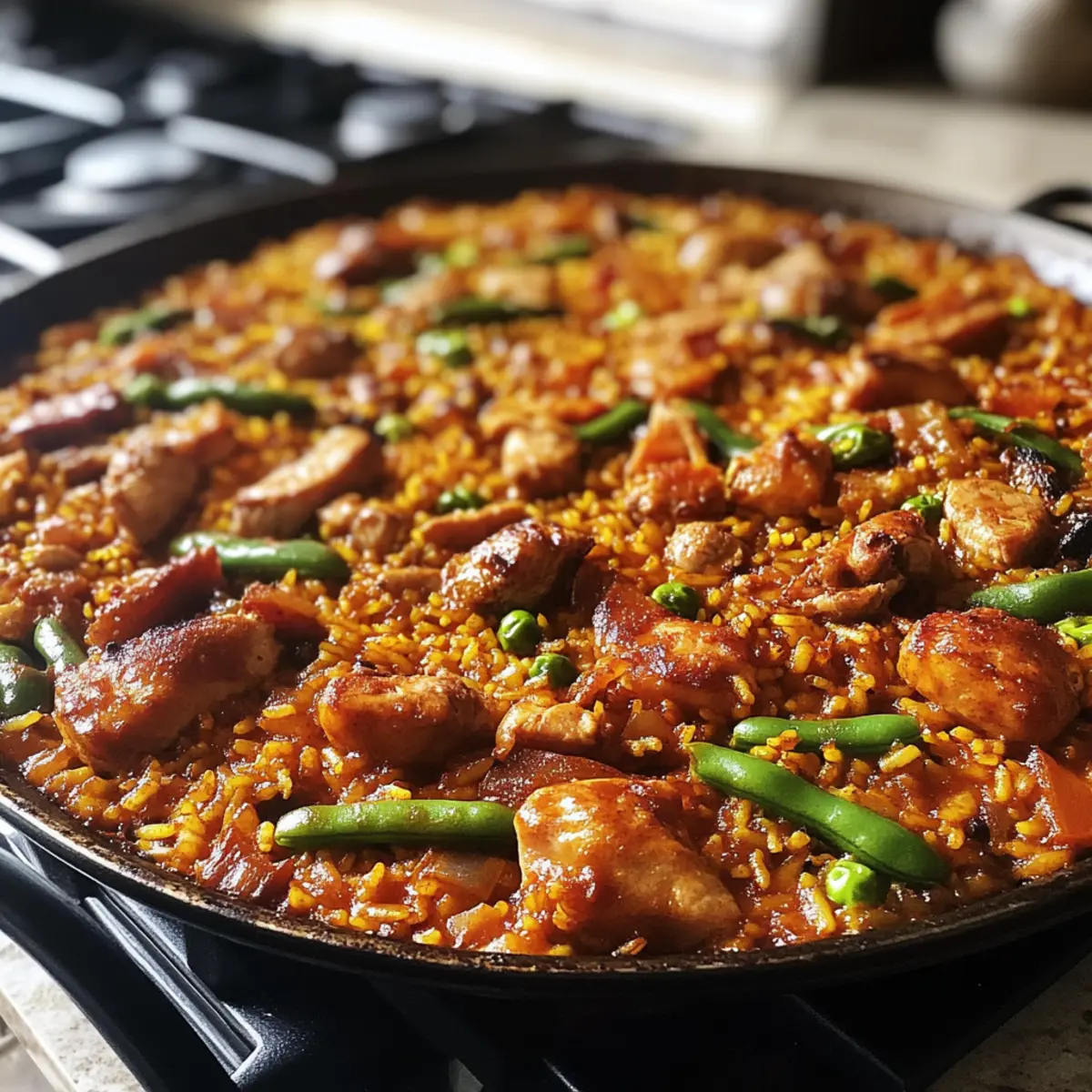
What makes Paella Valenciana so special?
Hearty, Rich Flavors: The gentle blend of chicken, rabbit, and aromatic saffron creates a flavor profile that’s truly irresistible.
Easy to Master: With simple steps and no advanced skills necessary, this dish is perfect for home cooks of all levels.
Versatile Base: Feel free to swap the meats or add seasonal vegetables for a refreshing twist while keeping that authentic essence intact.
Impressive Presentation: Serve it straight from the pan at your next gathering, and watch it steal the spotlight!
Meal Prep Friendly: Not only is it delightful fresh, but delicious leftovers make for easy reheating—great with a drizzle of olive oil!
Experience the diverse world of Spanish cuisine right in your own kitchen with this Authentic Paella Valenciana.
Paella Valenciana Ingredients
-
For the Rice Base
Short Grain Rice – Essential for achieving that perfect paella texture; Bomba or Calasparra varieties are best.
Water – Use hot water to help preserve cooking temperature and flavor infusion.
Saffron Threads – The heart of authentic flavor; steep in hot water to fully release colors and aromas. -
For the Meats
Chicken Pieces – Provides a rich base; substitute with rabbit for a more traditional touch.
Rabbit Pieces – Offers a unique flavor profile; feel free to use all chicken if preferred. -
For the Vegetables
Garrofó Beans – Adds creaminess to the dish; butter beans can serve as a delicious substitute.
Green Beans (Flat) – Brings freshness and crunch; trim and cut them properly for even cooking.
Tomato – Incorporate fresh, grated tomato for a natural sweetness and acidity to balance flavors. -
For the Seasoning
Fresh Rosemary – Infuses aromatic depth; dried rosemary can be used if fresh isn’t available.
Paprika – Adds a lovely smokiness; have it ready to enhance the dish without burning.
Olive Oil – Essential for sautéing, adding rich flavor to your base.
Salt – Crucial for seasoning; remember to divide it for different stages of cooking.
With these ingredients, your Paella Valenciana will not only be hearty and satisfying but also transport you to the beautiful landscapes of Spain. Enjoy this culinary journey!
Step‑by‑Step Instructions for Authentic Paella Valenciana
Step 1: Prep Vegetables
Start by trimming the green beans to about two inches in length, ensuring they are fresh and vibrant. Next, grate a ripe tomato to yield a creamy texture that will blend beautifully with the other ingredients. This prep work sets the stage for a flavorful Paella Valenciana, so take your time and enjoy the process.
Step 2: Infuse Saffron
In a small bowl, combine a pinch of saffron threads with about half a cup of hot water, letting them steep for 10 minutes. This infusion will enhance both the color and aromatic qualities of your Paella Valenciana. Voila! The enchanting golden hue you’re aiming for is just around the corner.
Step 3: Cook Meat
Heat a generous drizzle of olive oil in a large paella pan over medium-high heat. Once the oil is shimmering, add the chicken and rabbit pieces. Brown them for about 5-7 minutes until they are golden on all sides, sealing in their juices. After browning, set the meat aside on a plate, allowing the flavors to meld.
Step 4: Sauté Vegetables
In the same pan, add the chopped green beans and garrofó beans, sautéing them for approximately 4-5 minutes until they start to soften and turn lightly browned. This step builds a rich foundation for your Paella Valenciana, melding those vibrant vegetables with the residual meat flavors.
Step 5: Add Paprika
Slide the sautéed vegetables to one side of the pan, then sprinkle in a tablespoon of paprika. Stir the paprika into the hot oil for about 30 seconds, releasing its smoky, deep flavor. Make sure to keep a close watch to prevent burning, as this step is crucial for authentic taste.
Step 6: Combine Ingredients
Now, it’s time to mix it all together! Incorporate the grated tomato with the sautéed vegetables and paprika, cooking for another 2-3 minutes until the mixture is fragrant and thick. Don’t forget to return the browned meat to the pan, ensuring every element is combined harmoniously for your Paella Valenciana.
Step 7: Add Liquid
Pour in the infused saffron water along with an equal amount of hot water, ensuring the pan is deglazed from the flavorful bits. Sprinkle in fresh rosemary and a touch of salt, then bring this aromatic mixture to a gentle simmer. Cook for about 20 minutes, allowing the flavors to fully develop.
Step 8: Introduce Rice
Once the mixture is bubbling, gradually stir in 1.5 cups of short-grain rice evenly across the pan. Avoid stirring from this point on, as it’s essential for developing that lovely crust, or “socarrat,” on the bottom of your Paella Valenciana. Allow it to cook undisturbed for about 15 minutes over medium-high heat.
Step 9: Finish Cooking
After 15 minutes, check the rice for doneness; if needed, cover the pan and let it rest off heat for an additional 5 minutes. This final step ensures that the flavors mingle beautifully while allowing any remaining liquid to absorb completely, resulting in a perfect Paella Valenciana.
Step 10: Serve
Once ready, serve your Paella Valenciana straight from the pan for a stunning presentation. Optionally, accompany with lemon wedges to squeeze over the finished dish, enhancing the flavors. Gather around the table and relish this warming, hearty dish with friends and family.
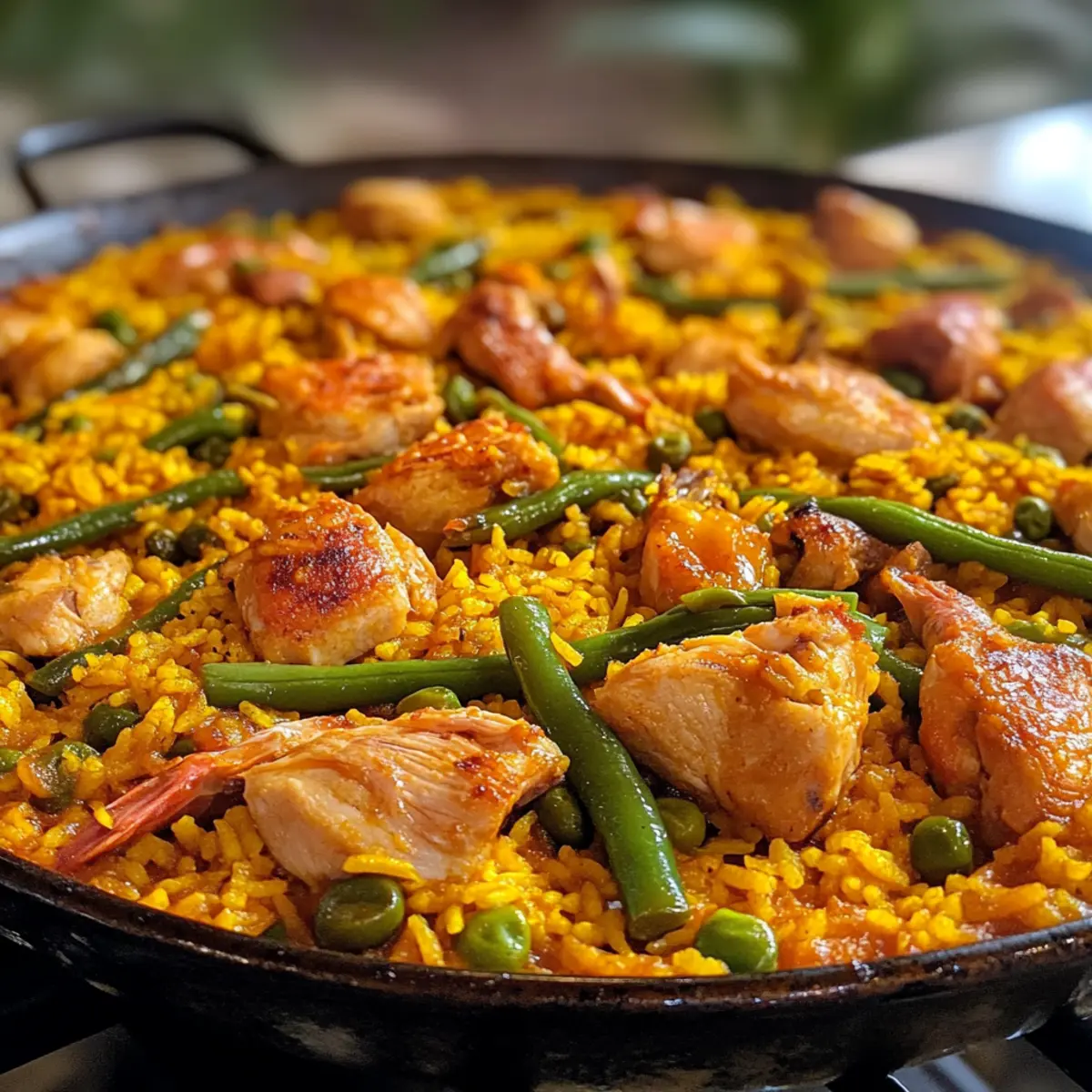
Expert Tips for Paella Valenciana
-
Sautéing Techniques: Brown your chicken and rabbit thoroughly to deepen flavor. Avoid adding stock; traditional paella relies on water for cooking.
-
Rice Care: Once the rice is in the pan, resist the urge to stir. This helps create the signature crunchy “socarrat” at the bottom—an essential feature of authentic Paella Valenciana.
-
Even Cooking: Use a large paella pan and even heat source to ensure all ingredients cook evenly. A flat surface is key for the best results.
-
Flavor Balancing: Adjust salt throughout stages of cooking; it enhances the depth of flavors without overpowering the dish.
-
Saffron Management: Make sure to steep the saffron threads properly; this step ensures the full release of colors and aroma that makes your Paella Valenciana truly special.
What to Serve with Authentic Paella Valenciana
Indulging in the vibrant flavors of a traditional Spanish feast opens the door to delightful pairing possibilities that enhance your dining experience.
- Crisp Green Salad: A fresh mix of greens dressed in a light vinaigrette adds a refreshing crunch, balancing the rich flavors of the paella.
- Garlic Bread: Serve with warm, crusty garlic bread to soak up the delicious broth, elevating every bite of your hearty meal.
- Roasted Vegetables: The sweetness of seasonal roasted vegetables brings a beautiful contrast and vibrant color to your table.
- Sangria: A chilled glass of fruity red sangria with hints of citrus complements the dish perfectly, enhancing the festive atmosphere.
- Olive Tapenade: Spread a dollop of savory olive tapenade on crackers as a charming appetizer, echoing the Mediterranean flavors of the paella.
- Lemon Wedges: Accompany your paella with fresh lemon wedges, allowing guests to brighten each bite and accentuate the saffron’s warmth.
These pairings not only create a harmonious meal but also invite everyone to share in the joy of vibrant Spanish cuisine.
Make Ahead Options
These flavorful servings of Paella Valenciana are perfect for busy weeknights or meal prep enthusiasts! You can prep the meat and vegetables up to 24 hours in advance. Simply brown the chicken and rabbit, then cool and refrigerate them in an airtight container. Chop the green beans and grate the tomato to store separately, both of which can be done the day before. When you’re ready to cook, sauté the prepped vegetables, add the meat, and continue with the recipe from adding the liquid onward. This way, you’ll enjoy just as delicious results with minimal effort, allowing you to share a mouthwatering home-cooked meal without the rush!
Storage Tips for Paella Valenciana
Fridge: Store leftover Paella Valenciana in a sealed container for up to 2 days. Reheat gently on the stove or in the microwave, adding a splash of olive oil to restore moisture.
Freezer: For longer storage, freeze portions of Paella Valenciana in airtight containers for up to 3 months. Thaw overnight in the fridge before reheating for the best texture and flavor.
Reheating: When reheating, aim for low heat to avoid drying out the rice. Stir occasionally and add a bit of water or broth for extra moisture if needed.
Serving: This hearty dish is best enjoyed fresh, but savoring it as leftovers is a delightful way to extend the joy of Paella Valenciana!
Paella Valenciana Variations & Substitutions
Feel free to explore these delightful twists that will make your Paella Valenciana uniquely yours while still embracing its authentic essence.
- Rabbit-Free: For those who prefer not to use rabbit, simply double the amount of chicken for a heartier dish that everyone will love.
- Vegetable Medley: Swap in a mix of seasonal vegetables like zucchini, bell peppers, or peas for a delightful freshness without losing that traditional feel.
- Spice it Up: Add a pinch of cayenne or crushed red pepper to the sautéing vegetables to infuse a gentle heat that elevates the entire dish.
- Herb Alternatives: If fresh rosemary isn’t on hand, thyme or oregano can provide an aromatic twist, while still maintaining that herbaceous depth.
- Nutty Texture: Toasted almonds or pine nuts sprinkled on top before serving can add a lovely crunch that contrasts beautifully with the soft rice.
- Tomato Boost: For an extra burst of flavor, incorporate a spoonful of tomato paste or diced bell peppers while sautéing to enhance the sauce’s richness.
- Citrus Infusion: Squeeze in fresh lemon juice just before serving; it brightens up the flavors, offering a refreshing lift that pairs beautifully with the rice.
- Slow-Cooked Variation: Consider making a slow-cooked version using a heavy pot or dutch oven to achieve a deeply infused flavor profile. Just be sure to adjust liquid accordingly!
Whichever variations you choose, you’re guaranteed a delicious, comforting Paella Valenciana experience. For more inspiration, why not explore some of my other traditional Spanish recipes? Enjoy your cooking adventure!
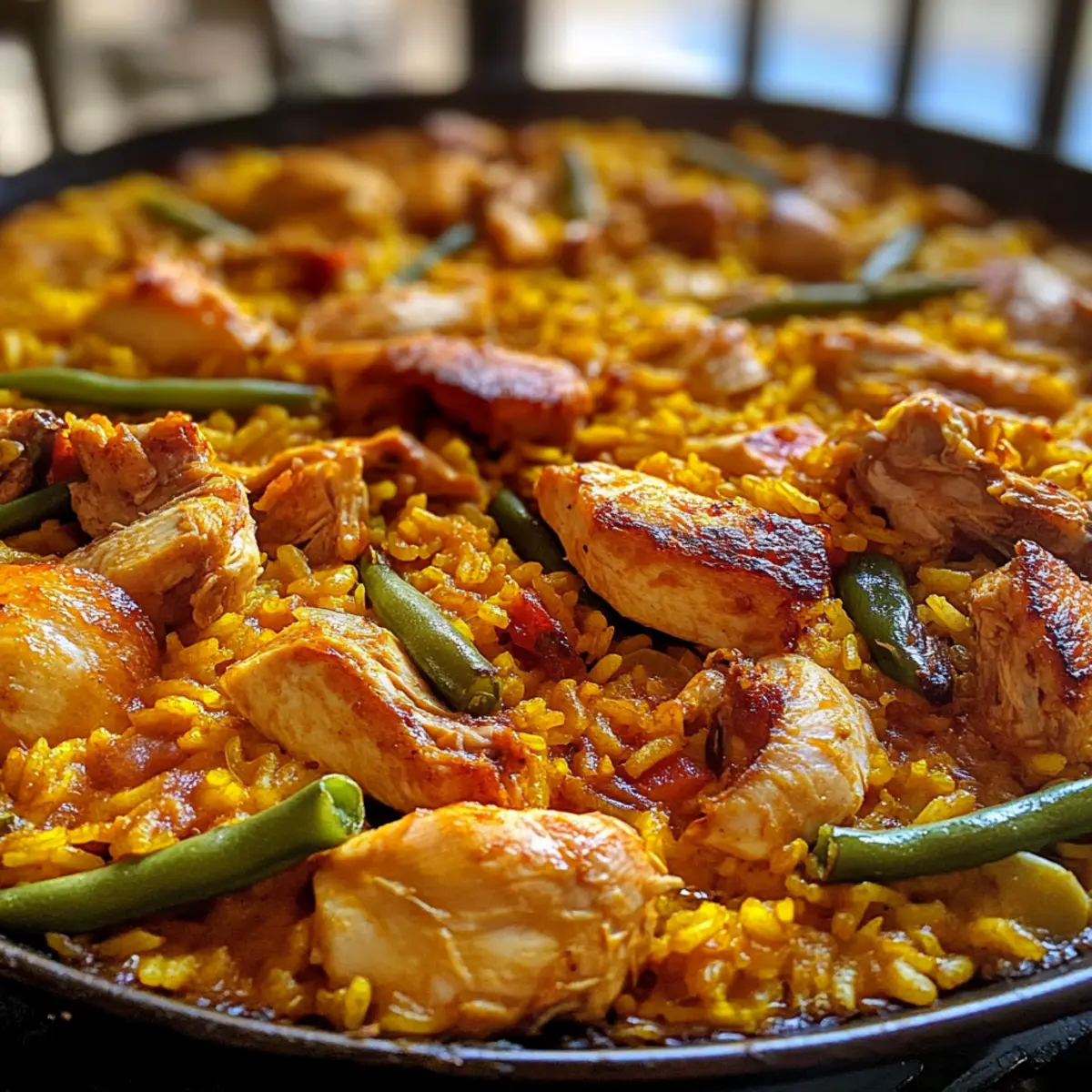
Authentic Spanish Paella Valenciana Recipe FAQs
What type of rice should I use for Paella Valenciana?
Absolutely! For an authentic Paella Valenciana, it’s essential to use short-grain rice varieties like Bomba or Calasparra. These types of rice absorb flavor beautifully while remaining fluffy, thanks to their high starch content. I recommend avoiding long-grain rice as it won’t achieve the desired texture.
How should I store leftovers of Paella Valenciana?
Very important! After your gathering, let any leftover Paella Valenciana cool before transferring it to a sealed container. Store it in the refrigerator for up to 2 days. When you’re ready to enjoy it again, gently reheat it on the stove or microwave. Adding a splash of olive oil while reheating will help restore moisture and flavor.
Can I freeze Paella Valenciana?
Absolutely! If you want to keep some for later, freeze portions of your Paella Valenciana in airtight containers for up to 3 months. For the best texture, thaw in the refrigerator overnight before reheating. When reheating, do so on low heat to avoid drying out and consider adding a bit of water or broth for moisture.
What should I do if my rice turns mushy?
Great question! If your rice comes out mushy, it may be due to stirring after adding it to the pan or using too much liquid. The key to avoiding this mishap is to leave the rice undisturbed while it cooks. If you find yourself in a pinch, don’t fret! Just cover your pan and allow it to sit off the heat for about 5 minutes; this can help absorb some extra moisture.
What if I have dietary restrictions or allergies?
Definitely something to consider! If you have specific dietary restrictions, you can modify the meats or vegetables to your needs. For instance, you can skip the rabbit if you don’t eat it, using chicken or even vegetable substitutes instead. Always check ingredient labels, especially for items such as broth, which may contain allergens. Enjoy the versatility of this heartwarming dish!
Why is saffron so important in Paella Valenciana?
Saffron is a hallmark of authentic Paella Valenciana, bringing a unique flavor and the signature vibrant color. If saffron is out of reach, consider using turmeric for color, but know that it won’t replicate the flavor profile. To maximize saffron’s flavor, infuse it in hot water before adding it to the dish. Saffron truly elevates your paella experience!
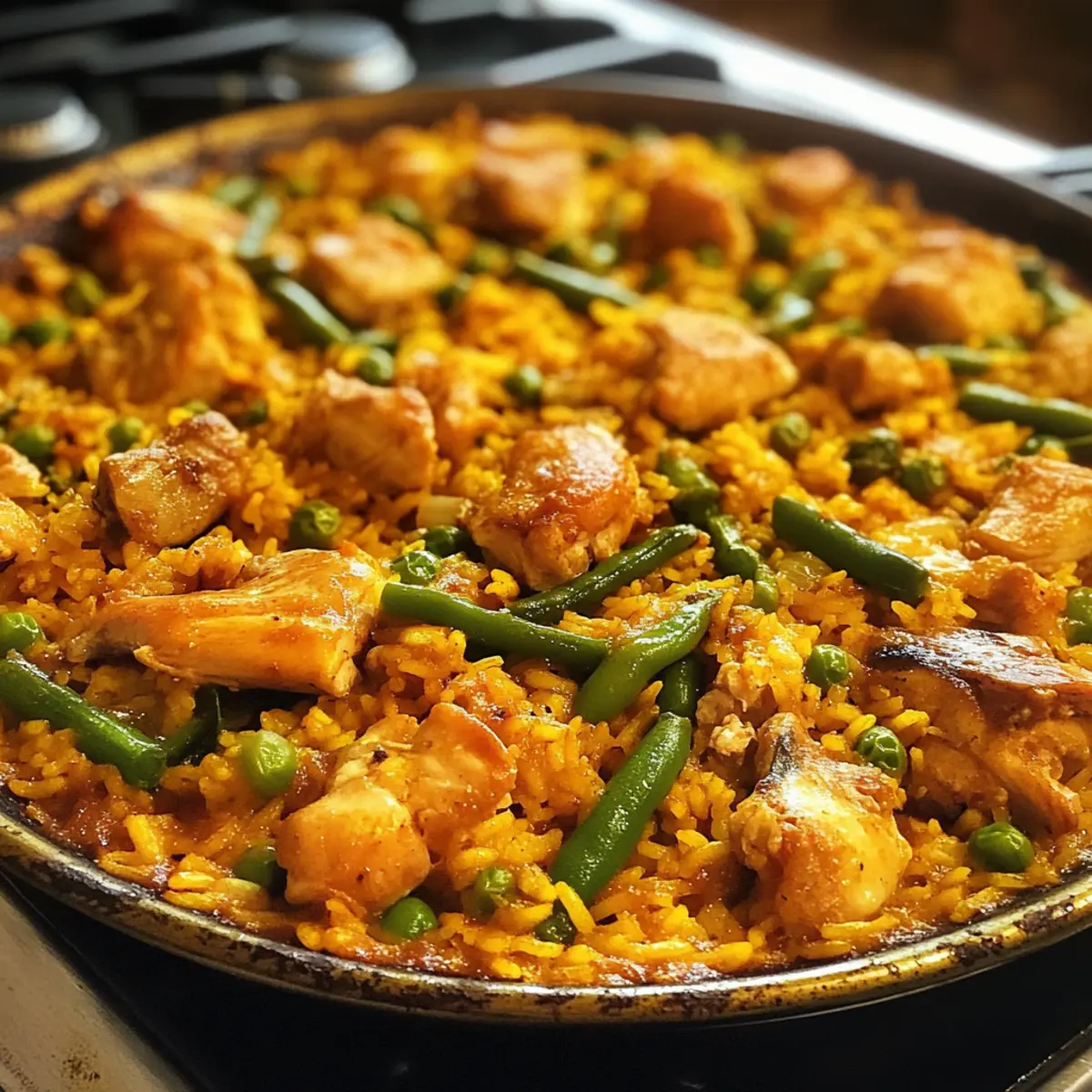
Savory Paella Valenciana: Your New Favorite Comfort Dish
Ingredients
Equipment
Method
- Trim the green beans to about two inches in length and grate a ripe tomato.
- Combine saffron threads with half a cup of hot water and let steep for 10 minutes.
- Heat olive oil in a paella pan and brown the chicken and rabbit pieces for 5-7 minutes.
- Sauté the green beans and garrofó beans for 4-5 minutes until lightly browned.
- Slide vegetables aside, add paprika, and stir into the hot oil for 30 seconds.
- Mix in grated tomato, cook for 2-3 minutes, and return the browned meat.
- Pour in saffron water and hot water, add rosemary and salt, and simmer for 20 minutes.
- Stir in short-grain rice, cook undisturbed for 15 minutes over medium-high heat.
- Check the rice for doneness; cover and let rest for 5 minutes if needed.
- Serve straight from the pan, optionally with lemon wedges.
Leave a Reply